
Leaders at the 15th Connected Africa Summit (C.A.S) in Nairobi have called for urgent policy harmonization and the removal of structural barriers slowing Africa’s digital transformation.
The leaders emphasized that seamless connectivity will be key to unlocking a unified Africa digital market.
Industry executives, policymakers and technology stakeholders said Africa already has the ingredients for rapid growth, including a youthful population, rising digital adoption and expanding infrastructure, but greater coordination is needed to turn that potential into economic progress.
Speaking during a panel discussion at the Summit, Safaricom CEO Peter Ndegwa called for deeper collaboration between governments and the private sector to create enabling policies, expand infrastructure and accelerate inclusive public sector digitisation across Africa.
“To unlock Africa’s full potential, we must deepen collaboration between governments and the private sector. By working together, we can create enabling policies, invest in the right infrastructure and accelerate public sector digitization in a way that is inclusive, scalable and impactful for millions of Africans” Ndegwa said.
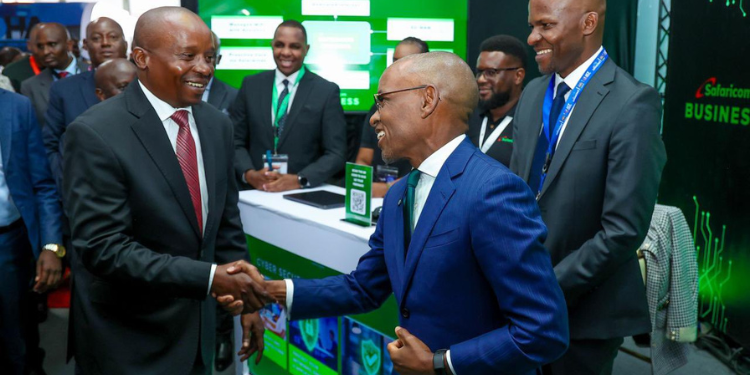
Safaricom Showcases its Digital Capabilities
Safaricom also used the summit to showcase the digital capabilities of its converged services model, which brings together its enterprise business, financial services, public sector digitization and technology units to provide integrated solutions for governments across Africa.
The company said the approach enables it to deliver secure, scalable and citizen-centred digital services through a single partnership model.
Ndegwa’s remarks were echoed by Deputy President Professor Kithure Kindiki who said digital inclusion can only be achieved through collaboration between government, business and citizens.
Kindiki said the public sector could not drive transformation alone, noting that broader partnerships would be necessary to expand access and opportunities in the digital economy.
“The public sector does not have a monopoly on resources. In order to achieve inclusion in the digital market, we must collaborate with the private sector and the citizens themselves,” he said.
Read More: Safaricom CEO Reveals Plan to Build East Africa’s Digital Market
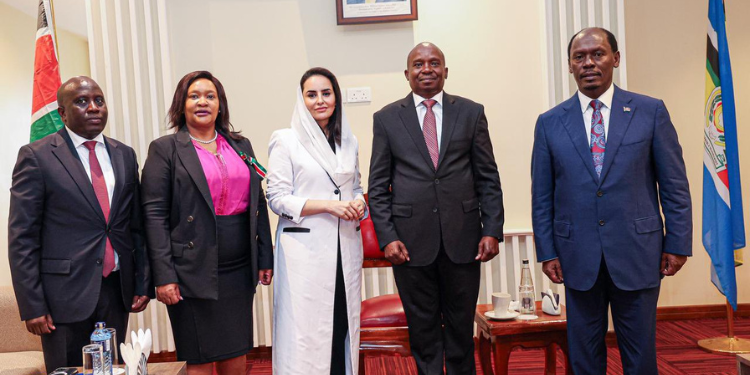
Connected Africa Summit
At the 15th Connected Africa Summit in Nairobi, leaders said Africa’s digital future depends on seamless cross-border connectivity and harmonised regulation.
Policymakers and industry executives emphasized the need for faster collaboration to unlock a unified continental digital market.
The summit, a key platform for advancing Africa’s digital transformation agenda, has underscored the continent’s vast potential to build such a unified digital ecosystem.
As it heads into its third day, delegates renewed calls for collective action, policy alignment and stronger partnerships, stressing that Africa’s digital future will depend on a shared vision for a more connected continent.
About Safaricom
Safaricom is the leading telecommunications company in East Africa, driven by a purpose to connect people to each other, to opportunities, and to information.
The company serves over 60 million customers across Kenya and Ethiopia and plays a major role in the region’s economy, supporting more than 1.1 million jobs and generating significant economic value.
Listed on the Nairobi Securities Exchange, Safaricom provides extensive network coverage through 2G, 3G, 4G, and 5G services reaching over 99% of Kenya’s population. It also operates M-PESA, Africa’s largest mobile money platform, which has been central to driving financial inclusion across the region.
Through its expansion into Ethiopia and continued investment in technology, sustainability, and inclusive employment, Safaricom remains a key driver of digital and economic transformation in East Africa.