KCB Group Plc posted a pre-tax profit of Kshs. 24.4 billion for the first quarter ended March 31, 2026, marking a 15.3% increase from Kshs. 21.2 billion recorded during the same period last year.
According to the results, the strong performance was driven by growth in interest-earning assets, rising customer deposits, and sustained digital banking momentum.
It was further supported by continued expansion across regional subsidiaries, despite a challenging operating environment.
The group’s balance sheet expanded by 10.8% to Kshs. 2.3 trillion, supported by a 15.7% increase in customer deposits and improved performance across its diversified business segments.
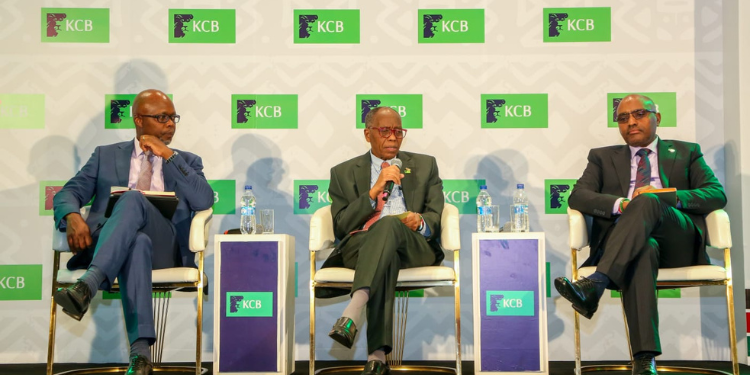
Speaking during the release of the results, KCB group C.E.O, Paul Russo said that the performance reflected disciplined execution and continued investment in digital innovation.
“Despite the challenging operating environment, we delivered solid growth driven by disciplined execution, continued investment in digital innovation and our unwavering commitment to providing financing which catalyzes economic transformation across the region.
“We continued to optimize our regional footprint and scale to best serve our customers and create sustainable shareholder value,” he added.
KCB Growth Supported by Interest-Earning Assets
Total operating income rose 8.5% to Kshs. 53.6 billion, driven mainly by growth in interest-earning assets across key markets.
However, gains were partly weighed down by pressure on net interest margins following regulatory rate cuts that reduced asset yields across the region.
Read More: KCB Shareholders Approve Kshs. 22.5 billion Dividend Payout
Strong Balance Sheet Performance Driven by Deposits and Lending
Customer deposits increased 15.7% to Kshs. 1.7 trillion, supported by continued onboarding of new customers across retail and corporate segments, strengthening the Group’s funding base.
The gross loan book rose 9.1% to Kshs. 1.32 trillion from Kshs. 1.21 trillion, reflecting increased credit demand across markets.
Non-Funded Income Rises on Digital Growth
Non-funded income grew 8.3% to Kshs. 17 billion, supported by higher digital loan disbursements and increased foreign exchange income.
The growth highlights continued traction in the group’s digital channels, which remain central to supporting trade, investment, and working capital needs.
Costs Increase on Expansion and Technology Investment
Operating costs rose 7.3% to Kshs. 24.3 billion, driven by higher staff costs, expanded technology investment, and regional business growth.
The increase reflects continued investment in digital infrastructure and operational capacity to support long-term growth.
Subsidiaries Continue to Support Earnings Diversification
Subsidiaries contributed 29.5% of group profit before tax and 31.5% of the balance sheet, reinforcing the group’s diversified business model.
Non-banking subsidiaries posted stable results, with KCB Bancassurance Intermediary contributing Kshs. 209 million, KCB Investment Bank Kshs. 274 million, and KCB Asset Management Kshs. 64 million in profit before tax.
Profitability, Capital Strength and Shareholder Returns Improve
Return on Equity stood at 21.5%, while shareholder equity rose 18.5% to Kshs. 352.2 billion. Earnings per share increased to Kshs. 22.18 from Kshs. 20.03, reflecting improved shareholder value.
Capital adequacy remained strong, with core capital at 18.2% against the 10.5% minimum and total capital at 21.6% versus the 14.5% requirement.
The group maintained a liquidity ratio of 51.1%.
Growth Amid Global Economic Risks
Group Chairman Dr. Joseph Kinyua said the results reflected the strength of the Group’s long-term strategy and disciplined execution.
“The Group’s strong start to the year is a clear affirmation of the effectiveness of our long-term strategy, the resilience of our regional businesses, and the discipline with which we continue to execute our priorities,” he said.
He noted that while East African economies remained resilient, external risks particularly the Middle East conflict continued to weigh on global conditions through commodity markets, inflation pressures, and financial tightening.
Paul Russo echoed the concern on external headwinds, noting their impact on credit dynamics across the region.
“While economic activity in East Africa remained resilient, we continued to see the impact of the Middle East conflict on economies, with a likely ripple effect of depressed credit demand, increased credit risk and lower remittance receipts, and on deposits,” he said.
He added that the group remained confident in its ability to navigate changing market conditions while continuing to support regional growth and financial inclusion.
Profitability, Capital Strength and Shareholder Returns Improve
Return on Equity stood at 21.5%, while shareholder equity rose 18.5% to Kshs. 352.2 billion. Earnings per share increased to Kshs. 22.18 from Kshs. 20.03, reflecting improved shareholder value.
Capital adequacy remained strong, with core capital at 18.2% against the 10.5% minimum and total capital at 21.6% versus the 14.5% requirement. The Group maintained a liquidity ratio of 51.1%.
Strategic Initiatives and Corporate Developments
During the quarter, KCB Foundation signed a partnership with UNHCR to enhance financial inclusion and livelihoods for refugees and host communities across the region.
In March, KCB Bank Kenya secured a $96.9 million (Kshs. 12.5 billion) Green Climate Fund facility to support MSMEs and farmers in adopting climate-smart and green financing solutions.
The Group also invested Kshs. 227 million in sponsoring the 2026 WRC Safari Rally, complemented by a nationwide consumer promotion whose grand prize was a one-bedroom apartment at Tatu City.
In April, KCB Bank Kenya partnered with the Ministry of Education to promote sustainable learning institutions through concessional financing for clean energy adoption in schools.
KCB also enhanced its digital payments offering by introducing a Kshs. 20 flat fee on Pesalink transactions.
With free transfers for amounts below Kshs. 1,000, the group aimed at improving affordability and convenience for customers.
It further strengthened its global reputation, being named Best Banking Group at the World Finance Banking Awards 2026.