
A company’s success is often measured by the numbers on its balance sheet. But money alone cannot tell the full story of its long-term value, its impact on society or its ability to thrive in a rapidly changing world.
For Safaricom, that story increasingly comes down to a critical question: how do you build a digital future that people can trust?
In its 15th Sustainability Report, Safaricom takes a closer look at what responsible growth means in an era shaped by AI, data and digital platforms.
For the first time, the company has adopted a double materiality approach, examining both its impact on society and the environment and how sustainability issues affect its long-term business resilience.
Across five pillars, the report explores the capabilities that will shape Safaricom’s future, from empowering communities and protecting the planet to building trust in the digital economy.
At the heart of it all is a simple but consequential idea: as technology becomes more powerful, trust becomes more valuable. And for Safaricom, the future is not just about what technology can do, but how responsibly, securely and inclusively it can be used.

Beyond Connectivity: Safaricom Creates Ksh 1.25 Trillion in Societal Value
The question of how Safaricom creates lasting value is not just theoretical. It is reflected in the livelihoods it supports, the affordability of its services, the communities it reaches and the infrastructure it builds to connect more Kenyans.
In the year to March 2026, that contribution translated into KES 1.25 trillion in value for Kenyan society, a 10% increase from the previous year.
According to the company’s 15th Sustainability Report, this value spans its operations, digital and financial services, infrastructure investments, employment and community programmes, offering a broader picture of Safaricom’s role in Kenya’s economy.
For customers, this impact is reflected in the affordability and accessibility of services. Non-chargeable M-PESA transactions accounted for 57.8% of total transaction volumes during the year.
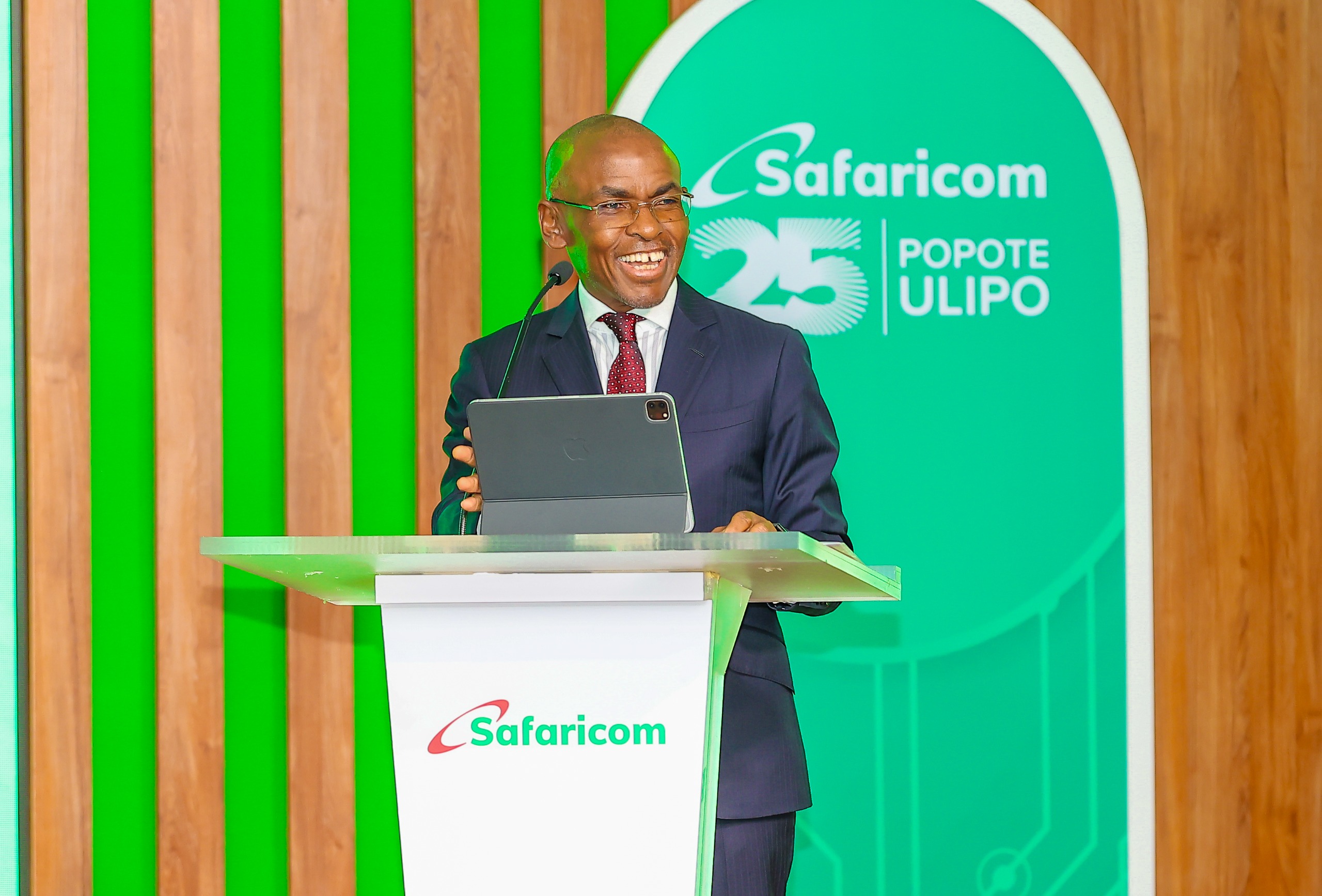
Speaking during the report’s launch, Safaricom Group Chief Executive Officer Peter Ndegwa said the company’s future was about more than profitability, emphasizing the importance of the value it creates for society and the impact it has on people’s lives.
“Our impact is measured not only by what we earn, but by the value we create for society. More than half of M-PESA transaction volumes attracted no customer charge, helping millions of Kenyans transact affordably and participate in an increasingly digital economy,” said Peter.
A Wider Ecosystem of Opportunity
Beyond its direct services, Safaricom’s impact extends across a broad ecosystem of agents, dealers, suppliers and other partners whose livelihoods depend on its operations.
During the year, this ecosystem sustained more than 1.4 million jobs, highlighting the role the company plays in supporting economic activity beyond its own workforce.
M-PESA remained a significant driver of this contribution. By enabling customers to transact, save, invest and access credit, the platform continued to expand access to financial services. Its social value was estimated at KES 478.1 billion in FY26.
Safaricom also continued to invest in connectivity to bring more Kenyans into the digital economy, including making fixed data services more accessible through affordable customer propositions.
“As we grow into a technology company, we want every Kenyan to have the opportunity to participate in the digital economy. That means reliable connectivity, affordable access and the skills to use technology to improve their lives,” said Ndegwa.
The company’s contribution also reached communities through its social investment programmes.
Safaricom and the M-PESA Foundation impacted 4.4 million lives through initiatives spanning health, education, economic empowerment, water and environmental conservation.

Greener Networks, More Inclusive Workplaces
As Safaricom expands the infrastructure that keeps people connected, it is also working to reduce its environmental footprint.
In FY26, more than 2,000 network sites were running on solar power, up from 1,432 in the previous financial year.
Its tree-growing programme also reached 3 million trees, reflecting continued efforts to integrate environmental considerations into its operations.
The company’s sustainability ambitions extend to its workforce. Persons with disabilities accounted for 4% of Safaricom’s employees during the year, against a target of 5%.
While this reflects progress towards a more inclusive workplace, it also highlights the work that remains to achieve the company’s goal.
Together, these efforts demonstrate that sustainable growth is not only about expanding services and increasing economic value, but also about how that growth affects people and the environment.
Read More: Six Creators Win Inaugural Safaricom Capture the Good Challenge
A New Approach to Measuring Impact
Beyond the reported outcomes, Safaricom is changing how it assesses and communicates its sustainability performance.
For the first time, the company has transitioned its sustainability disclosure framework to a double materiality approach.
This considers two dimensions: how its activities affect people and the environment, and how sustainability-related issues, including climate change, fraud and cybersecurity, could affect its long-term business value and resilience.
The approach provides a broader lens through which to assess the risks and opportunities associated with operating in an increasingly digital economy. It also reflects Safaricom’s efforts to strengthen its reporting in line with evolving global standards.
In preparation for mandatory sustainability reporting requirements in Kenya, the company aims to achieve full compliance with the applicable IFRS Sustainability Disclosure Standards by FY28.
“Our commitment is to create lasting value for our customers, communities, investors and the planet. As technology becomes more central to people’s lives, we have a responsibility to ensure that growth and innovation create opportunity, strengthen trust and leave society better off,” said Ndegwa.

The Numbers Behind Safaricom’s Sustainability Impact
Safaricom’s FY26 report puts its contribution into perspective. The company created KES 1.25 trillion in value for Kenyan society, representing a 10% increase from FY25, while sustaining more than 1.4 million jobs across its wider ecosystem.
On affordability, 57.8% of M-PESA transaction volumes attracted no customer charge. In fixed connectivity, of the 739,000 homes connected, 8,200 subscribed to the affordable KES 800 monthly bundle.
Its environmental efforts included powering more than 2,000 network sites with solar energy and reaching 3 million trees through its tree-growing programme.
Meanwhile, persons with disabilities accounted for 4% of its workforce, and 4.4 million lives were impacted through Safaricom and M-PESA Foundation programmes.
These figures offer a snapshot of the scale of Safaricom’s contribution. But the broader question remains how the company will sustain this impact as technology evolves, digital risks become more complex and expectations of responsible business continue to rise.
For Safaricom, the challenge is not simply to connect more people or introduce new technologies.
It is to ensure that the digital future it helps build is accessible, inclusive and worthy of the trust that millions of Kenyans place in it.